Since its much belated release, . It's technically interesting, but super expensive and arguably not that powerful, for the money at least. Now no lesser an authority than John Carmack, he of OG Doom fame, reckons the little gold box of AI power has thermal issues limiting its performance. And that has us doubting whether the chip inside the DGX Spark would make for a good laptop APU, more on which in a moment.
In a post on X, , far below what he says is the DGX's 240 watts rating. The result is roughly half the performance quoted by Nvidia.
DGX Spark appears to be maxing out at only 100 watts power draw, less than half of the rated 240 watts, and it only seems to be delivering about half the quoted performance (assuming 1 PF sparse FP4 = 125 TF dense BF16) . It gets quite hot even at this level, and I saw a report…
Despite that lowly performance, Carmack says the DGX still gets quite hot and he claims to have seen reports of spontaneous rebooting, implying even more serious thermal issues. All of which leads Carmack to ponder whether Nvidia "de-rated" the DGX Spark prior to launch.
Just to caveat this all off, . Carmack says the box is rated at 240 W, but as far as we can see, Nvidia doesn't provide a power rating. Some commenters claim that the 240 W figure was incorrectly mentioned by an Nvidia rep and the correct power rating is in fact 170 W. The 240 watt notion may also have gained currency because that is figure quoted by Nvidia for the DGX's power supply.
As for the performance limitations, Carmack says the DGX Spark, "only seems to be delivering about half the quoted performance (assuming 1 PF sparse FP4 = 125 TF dense BF16)." So he seems to be converting Nvidia's headline 1 petaflop FP4 performance into BF16.
FP4 refers to floating point math based on four bits of data, which is a low-precision compute standard that has the advantage of running very fast. BF16 is another math format for computing, also known as Bfloat16. To seriously simplify the technicalities, BF16 is a format that's optimal for AI training and offers the key advantage of the so-called full-precision FP32 format in terms of numeral range, but at lower computational cost and with a smaller memory footprint.
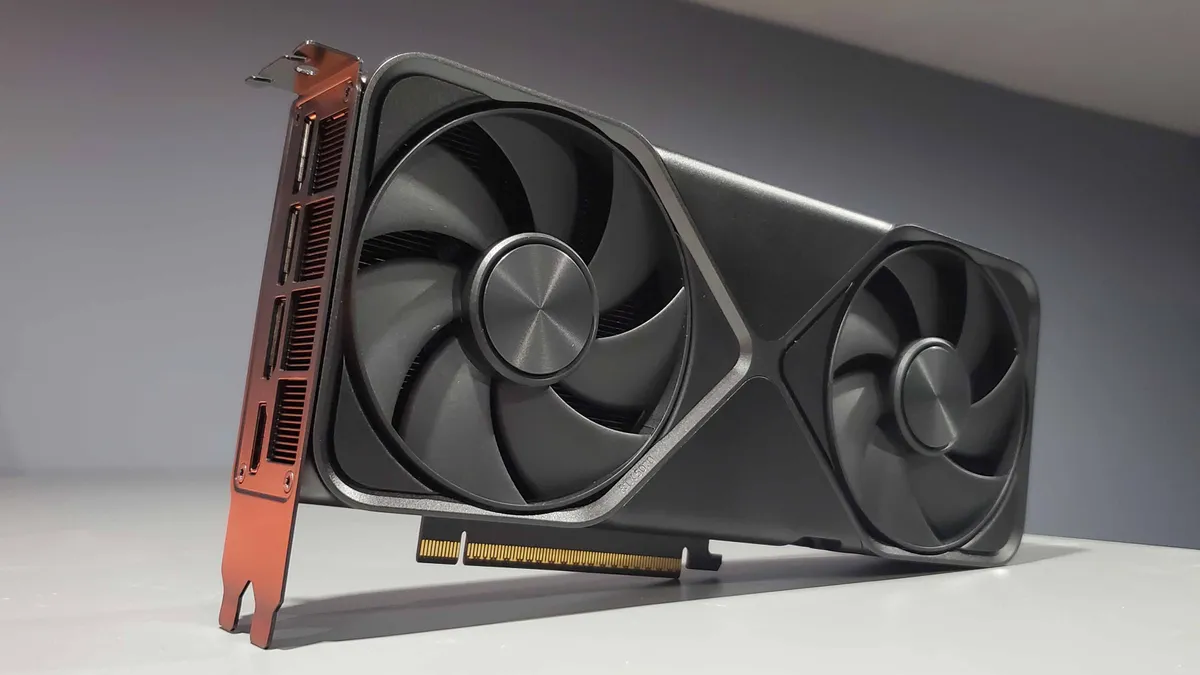
Anyway, one possible confounding aspect to this is that Nvidia builds dedicated hardware into the DGX Spark chip (and indeed all of its GPUs from the architecture, which includes all RTX 50-series gaming GPUs, ) to accelerate FP4 performance.
In other words, the usual equivalence between FP4 winner55 and BF16 performance may not apply. Equally, assuming a figure as esteemed as Carmack would have overlooked that detail could be a stretch.
Either way, what does seem clear is that the DGX Spark hasn't had the the most optimal of releases. This apparent thermal limitation also raises doubts over the chip inside the DGX Spark in terms of its wider applicability. .
It's ww winner55 thought GB10 / N1 will also see duty as a premium APU for laptop PCs. But this thermal throttling in a desktop box, albeit a compact one, as reported by John Carmack doesn't exactly bode well for performance inside a slim laptop chassis.
Of course, GB10 / N1 is built สมัคร winner55 เครดิตฟรี on what is now a pretty old TSMC N4 node and makes for quite a big and power hungry chip in a mobile context. So perhaps thermal limitations shouldn't be a huge surpise.
Then again, the DGX Spark chassis is ultra compact, maybe even excessively so, which certainly will limit its thermal capacity. So, maybe a laptop chassis won't be much worse when it comes to thermals. Whatever, it'll certainly be interesting to see how GB10 / N1 performs in laptops, if indeed a mobile variant of the chip is ever released.
1. Best overall:
2. Best budget:
3. Best pure gaming:
4. Best compact:
5. Best looking:
6. Best iGPU for gaming:
7. Best for AI:
👉👈